

The Leap from Bench Scientist to Translational Medicine and Studying IL-27 Biology
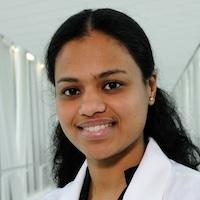
Dr Sruthi Ravindranathan leads the translational and biomarker efforts for Coherus’ casdozokitug. She talks about how her work advances a deeper understanding of IL-27 biology, and what technologies and biomarkers are aiding her research.

You began your career in bench science. How did you transition to translational/clinical?
For me, it was a very natural transition because I’ve always wanted to be closer to the patient data and better understand how treatment decisions are made, but it didn’t happen by itself. I had to ask for it. I had to advocate for myself and say, “I like preclinical, but I want to explore other things as well.”
My advice for someone, perhaps someone finishing their PhD with benchwork experience, is to learn the ropes of how translational medicine works while you’re still doing bench science. Keep in contact with folks in other teams who are doing translational medicine, get a feel for it, and then step into that zone. That’s what worked for me, and that slow transition was very helpful.
What work are you leading at Coherus?
I am responsible for looking at biomarker data coming out of clinical studies to better understand IL-27 biology and how it shapes immune activity in solid tumors. IL-27 the cytokine by itself is inhibitory in certain solid tumors, including hepatocellular carcinoma, where it dampens NK and T cell activation and cytotoxic potential.
By inhibiting IL-27 using casdozokitug, we release that break on both compartments of the immune system and have observed pharmacodynamic signals that are consistent with this mechanisms of action.
"Learn the ropes of how translational medicine works while you’re still doing bench science. Keep in contact with folks in other teams who are doing translational medicine, get a feel for it, and then step into that zone."
What are you learning about the immune landscape that would be useful for other IO scientists to know?
We’re starting to better understand the immune microenvironment, specifically that it’s not just T-cell-focused. We have begun to appreciate other inhibitory immune cells such as regulatory T cells, and the field is increasingly realizing that we need to expand beyond a single mechanism. This includes approaches such as therapies targeting NK cells or inhibitory myeloid cells. I think this broader understanding is also why the field is moving towards bispecific antibodies and antibody-drug conjugates. We potentially need to target multiple pathways at the same time, not just one.
How is casdozokitug different from immunotherapies?
Many immunotherapies primarily target T cells, with downstream or bystander effects on other immune cells. On the other hand, early pharmacodynamic analyses show that casdozokitug modulates both NK and T cell compartments. By far this is a key differentiator for casdozokitug, especially in cancers such as hepatocellular carcinoma, where NK cells are highly dysfunctional.
What knowledge about solid tumors is driving your choice of biomarker and technologies?
The more we learn about how heterogenous solid tumors are, the more important it becomes to design biomarkers that help us understand which patients are likely to respond to a given therapy.
We now have advanced technologies that can perform transcriptomic analyses on very small amounts of samples, allowing us to expand what we can learn from patients who actually respond to the therapy. By better understanding these responders, we can work toward increasing that population, which is ultimately the goal.
"We have begun to appreciate other inhibitory immune cells such as regulatory T cells, and the field is increasingly realizing that we need to expand beyond a single mechanism."
What technologies are you leaning on to help understand the nuances of tumors and of patients?
Previously, the field largely relied on bulk sequencing. Now, we know that cells talk to each other and their proximity matters. Spatial transcriptomics allows us to capture this context and can provide insight even before a clinical response is observed. Many clinical trials are now collecting tissues before and during treatment so we can better understand how the drug is affecting the tumor. As a result, we are moving the needle in our understanding of the tumor microenvironment in much greater detail than before.
One of the main challenges with spatial transcriptomics is getting biopsies. It can be particularly difficult for some cancers like hepatocellular carcinoma, where patients may be reluctant to undergo repeated tumor biopsies.
What other technologies or biomarkers are transformative in how we approach translational medicine?
Biomarkers are playing a very important role in translational medicine right now. ctDNA, for example, is being explored as a way to identify which patients are more likely to respond to therapy, potentially sparing patients from undergoing treatments that may not benefit them. I'm really excited about how the field is moving towards that. As we continue to generate larger datasets and apply AI-driven approaches to analyze them, I think we will see real progress.
I am also excited about how much information we can extract from a single biopsy sample. As a field, we may need to better appreciate the value of tumor biopsies and generate robust datasets for each tumor type to understand the relationship between what we observe in the tumor and what we detect in the blood. If we can establish those correlations reliably, it may eventually reduce the need for repeated tissue biopsies. Once again, AI can play an important role here as well, given its ability to analyze large, complex datasets.
What keeps you passionate about this work?
Immunotherapy is very humbling, because you think you know everything about a pathway and then new data comes out that completely changes your perspective. That constant evolution is what keeps me excited about the field. Earlier in my career, I worked in preclinical research and spent most of my time at the bench. Transitioning into translational science has brought me closer to the patients. Seeing patient responses and understanding the reasons behind those responses is what truly keeps me passionate about this work.
What advice would you give young professionals entering life sciences careers?
One major thing that stands out is curiosity. This is a very interesting time to get into life sciences. While there will be moments when you feel discouraged, curiosity about what’s really happening scientifically, can be a powerful driver for your career.
Another important piece of advice, especially for women, is to build a strong support system. Whether it’s at work or at home, having people who support you as you move through different phases of your life is critical. Once that support system is in place, it becomes much easier to ask for help and to do so without hesitation.