

IO Biotech Investor Perspective on Raising Capital Trends in Biotech and Advice for Young Investors
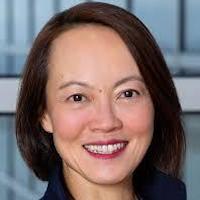
Dr I-hung Shih, Managing Director and Portfolio Manager at Eventide Asset Management, gives her insights on the shift towards more investment in innovation, how she approaches investment for Eventide’s portfolio, and her advice to young investors.

What’s your investment philosophy?
Our motto is investing in innovative healthcare solutions. Our fund is two-thirds biotech, and for that, we’re looking for the J curve. We want to focus on the value inflections that we can unlock in the biotech space, particularly for immuno-oncology. The most difficult part is translational medicine, which has been a hard nut to crack, and the mouse immune system doesn’t translate to the human immune system.
Therefore, for immuno-oncology, we’re relying on human data as our first entry point, meaning there is a certain level of proof-of-concept data and not just seeing response rates. It’s important to see strong indicators on the biomarker sides, including cytokines as well as T-cell infiltration, to show a potent and effective response in humans. That defines where we see the true inflection point, and therefore we don’t go too early.
"We want to focus on the value inflections that we can unlock in the biotech space, particularly for immuno-oncology."
How has that philosophy been actualized in your portfolio?
Our portfolio, particularly our top positions in the last 10 years, has focused on late-stage and commercial leans in a very risk-off environment. For the late-stage, we are very successful in respiratory and diagnostics, as well as targeted oncology. However, if you look beyond the top 10 positions, we have interest in immuno-oncology and we are trying to keep that interest.
If we look at the new XBI that was refreshed today (December 19th), there are only eight companies that could be categorized as immuno-oncology. A lot of them are in cell therapies, TCEs, cancer vaccines, and we do have a couple of them in our portfolio. Cancer vaccines in bladder cancer, for example, is something that we see as an emerging trend and also speaks to unmet medical needs. We’re also seeing that former cell therapies are now pivoting to address immune and autoimmune diseases. We see nice translation there, and especially in certain rare diseases that were previously treated by cytotoxic agents, now have cell therapies deployed for them.
What trends are you noticing amongst IO biotechs?
I would say how much IO is informing the treatment of autoimmune diseases. The 2000s and 2010s were defined by Keytruda and cell therapies rising, and that’s propelling us into autoimmune disease. We’ve learned so much using cell therapies, bispecifics and T cell engagers in heme malignancies that we can now unlock the potential for in autoimmune diseases mediated by B cells and T cells.
Another trend we’re seeing is the green shoots coming back out. We’ve had years of frustrations after Keytruda and everyone wondering, “What is the next big thing?” The mouse immunology doesn’t translate, but I am seeing attempts to go straight to humans and try to unlock what we previously have not been able to unlock in IO, especially in TCRs. That’s probably one of the most unknown areas in this space.
There is a company called Repertoire who is making efforts to map new peptides that we haven’t seen. We’re seeing companies going after known peptides, like MAGE and PRAME with limited efficacy, and now with these newer peptides, I’m excited to see what happens.
"Now that we have the capital, there is more energy for redeploying into more unique and solid ideas."
How would you describe today’s capital-raising environment for biotechs?
The last 4-5 years have been difficult, but I think the ground is softening for biotech funding in the innovative space. There was a huge amount of investment in 2019-2021 in early stage platform, and pivot to de-risked ideas and in Me-Beters. There has been an over-crowding effect in the recent years, especially going into incremental improvements and validated targets. That’s because it’s been a risk-off environment.
I do think the risk-taking is coming back a bit, because we’ve had a bit of recovery on the biotech side since August 2025. That was triggered by several factors, including the risk being a little lower in terms of tariffs, Most Favored Nations, and FDA leadership. There’s some instability in FDA leadership but there’s also been more transparency and more efforts to make it easier for biotechs doing single pivotal studies with a high effect size and to open up INDs more easily. And on top of that, M&A was very healthy in 2025 and expected to be strong in 2026.
All of those factors drive a feeling of “Maybe we should invest in biotech.” There is a fresh pool of capital because pharma has been buying out our top positions both on the public and private sides. People are sick of Me-Too drugs at this point, and now that we have the capital, there is more energy for redeploying into more unique and solid ideas.
What are the after-effects of over-investment in 2019-2021 in today’s environment?
However, there was a similar environment in 2019-2021, where capital funded too many early ideas, and for many companies leadership and talents were diluted. That era created a bubble that we’ve needed to consolidate and I do think that consolidation is happening.
For the companies that we funded from 2019-2021, too many of them diluted the capital, but with consolidation, it also means that they’re more mature and the companies that couldn’t get funding were weeded out for the right reasons.
The surviving companies are now tried and true, and have the breakthrough, the management team, and the ability to navigate this very difficult capital environment. So now, we have a crop of companies that are more investible and attractive for capital.
What keeps you focused in your work?
My story is very simple. I’m not a finance person, I’m a biotech person. I spent six years at Gilead Sciences as a scientist making drugs and in a commercial setting trying to sell the drug. So my true north is the medical needs of patients. That’s what keeps me going every day: the potential to unlock a breakthrough medicine that can help patients. And luckily there is a strong correlation in our industry because of good medicines and strong returns.
"That’s what keeps me going every day: the potential to unlock a breakthrough medicine that can help patients."
What is your advice for young professionals entering life sciences investment?
Find your true north. I have mine, so I don’t have to worry only about the financial returns because it comes as a byproduct. So seek your true north and hone your craft in order to identify the key debates and key determinants for success. If you’re driven by financial outcomes, that’s fine – what are the key determinants to drive the financial success in your company?
The other piece of advice is to develop your own style. Some people are more short-term, others are more long-term. We all have different styles, but if you can figure out yours, your investment career will be sustainable and successful.