
The Evolving Role of the CMO: Balancing Clinical and Financial Strategy
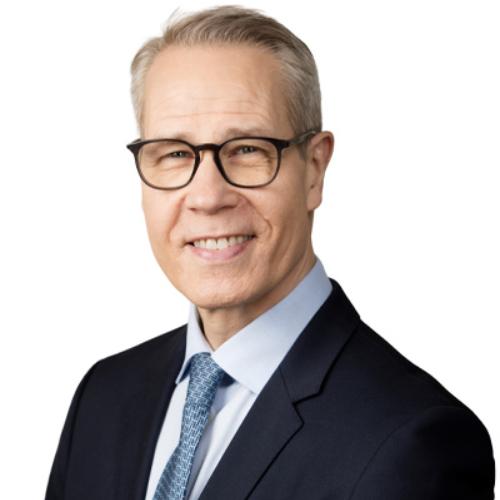
In today’s environment, CMOs are often required to make sharper, more strategic trade-offs much earlier than before. Dr Peter Hovstadius, CMO of Lipum AB and the Swedish Association of the Pharmaceutical Industry (LIF), shares how CMOs balance between early clinical study design, scientific rigor and limited financing.

How has the biotech CMO role evolved in the past five years?
The core of the CMO role has not changed and should not change: medical professionalism, ethical integrity and the willingness to be the adult in the room when patient safety or scientific honesty is at stake. I think most CMOs would agree on that. What has changed is the pressure around those principles.
Today, with tighter funding and investors constantly asking for clear value inflection points, the real risk is rarely something dramatic or unsafe. It is more subtle. You start to see pressure to make studies a bit smaller than they should be, endpoints a bit easier or interpretations a bit more optimistic than the data really supports. That is where the role of the CMO is truly tested.
I have come to see underpowered or poorly designed studies as a patient risk in themselves. If you expose patients to a trial and still cannot answer the main scientific question at the end, you have not only wasted money. You have wasted patient opportunity. In that sense, the CMO role today is as much about protecting decision quality as it is about protecting safety.
At the same time, the role has become broader and more outward facing. In smaller biotech companies, the CMO is no longer just responsible for clinical execution. You are expected to contribute to strategy, financing discussions, partnerships and long-term planning. The current funding climate forces sharper prioritization, earlier stop decisions and much clearer thinking around what really matters now versus later. In practice, that means being very good at answering one question: what do we need to know next to move the company forward, and nothing more than that.
What are some best practices in balancing between empowering clinical studies with financial constraints?
The most helpful mindset shift is to treat every protocol as a decision tool, not as a data collection exercise. In clinical medicine, you do not order a test unless you plan to act on the result. The same logic should apply here. The key question is simple: what decision will this study allow us to make, and what will we do differently depending on the outcome?
Many trials become too complex not because the science demands it, but because of anxiety. Someone might ask for this endpoint later. Someone might question why we did not collect that data. So, we add more and more. Complexity, however, comes at a real cost. It slows execution, increases operational risk and often makes the signal harder to interpret.
A concrete example from my own work: when we discussed a development plan with a large investor who questioned our capital needs, I did not defend a single “perfect” study design. Instead, I presented three different study options to answer the same core question. One was lower cost but higher risk. One was more balanced. One was more robust but more expensive. I explained clearly what each option could and could not deliver. Then I asked a simple question: what level of risk are you actually willing to take? That shifted the discussion from arguing about cost to aligning on risk tolerance.
Operational reality also needs to be part of the design from day one. A study can look elegant on paper and still fail because sites cannot recruit, or patients find it too burdensome. Involving sites and patients early is not a “nice to have.” It is a way to reduce risk and cost by improving feasibility.
Finally, stopping early matters. We need to be clear about when a study should stop if the hypothesis is not holding. Killing a weak idea early may sound harsh, but in a tight funding environment it is both ethical and responsible. It protects patients, preserves capital and keeps options open.
"If you expose patients to a trial and still cannot answer the main scientific question at the end, you have not only wasted money. You have wasted patient opportunity."
What role does the CMO play in financing conversations?
I do not think a CMO needs to become a CFO. But a CMO must be able to speak the language of finance well enough to connect clinical decisions to value creation. Clinical strategy and financing strategy are tightly linked, especially when money is limited.
My role in financing discussions is to help translate the clinical plan into something investors can understand and trust. What are the key milestones? What risks are we taking? How exactly will we reduce those risks with the next study? Investors are not just buying science. They are funding a sequence of decisions under uncertainty.
That also means being present when cost discussions risk undermining scientific value. It is easy to talk about “capital efficiency,” but a cheaper study that cannot answer the main question is not efficient. It is wasteful. The CMO has to be there to make sure that financial pressure does not quietly erode decision quality.
There is also a human side to this. The CEO and CFO are balancing many priorities at once. A “no” to spending is not a statement about the importance of science. The CMO helps keep the conversation grounded and constructive by focusing on outcomes: what do we need to know next, and what is the leanest credible way to get there?
How can CMOs effectively articulate value to different stakeholders?
The first step is to accept that “value” is not the same for everyone. There is one core story, but it needs different translations. The backbone stays the same: the unmet need, why this approach could work, what we know, what we do not know yet and how we plan to learn it. What changes is the emphasis.
Investors mainly care about risk, timing and credibility. Regulators focus on benefit-risk and data quality. Clinicians want to know if this will make a real difference in practice. Payers, especially in Europe, care about comparisons and real-world usefulness. Patients care about outcomes that affect daily life.
A practical approach I use is to decide, before any meeting, what question the other party needs answered to move one step closer to yes. Then I build the story around that question. Everything else becomes supporting material, not the main message. If you do not do that, you end up delivering the same scientific presentation to everyone, and it rarely works well.
"My role in financing discussions is to help translate the clinical plan into something investors can understand and trust."
What mistakes do CMOs make when pitching, and how can they preempt those mistakes?
The most common mistake is forgetting who the audience is. Scientists often present with one default style: lots of detail, high speed and the assumption that everyone shares the same priorities. That can work in a scientific setting, but it usually fails with investors or boards.
Another mistake is confusing information with persuasion. A deck can be full of data and still leave the audience unsure what they are supposed to think or decide. If people cannot repeat your main message after a minute, the pitch is not clear enough.
A third mistake is lacking structure. You do not need drama, but you do need a clear flow: what is the problem, what did we do about it and what happened or will happen next? Without that structure, even good science gets lost.
I have made these mistakes myself. Earlier in my career, I often overbuilt protocols and presentations to anticipate every possible question. My intention was to build credibility. The result was complexity and a diluted message. Today, I try to be much stricter about what is essential, what supports the essential and what is simply fear disguised as thoroughness.
What do you wish you knew when you first became a CMO?
I wish I had understood earlier that the job is less about having the best answers and more about asking the right questions, over and over again. The best CMOs I know never get tired of explaining the logic behind a strategy, especially under pressure.
I also underestimated how emotionally demanding the role can be. When funding pressure increases, the CMO is sometimes the only person whose main focus is evidence quality and patient impact. That can feel lonely. Staying calm, factual and principled in those moments is a skill you have to practice.
Finally, I wish I had learned earlier not to take tough questions personally. Questions from boards or investors are signals, not attacks. When you stop defending and start trying to understand where the question comes from, conversations become much more productive and much less exhausting.
What role do you play as CMO of LIF (the Swedish Association of the Pharmaceutical Industry)?
I have a “hybrid” career working both as a classical CMO in biotech and as a policy focused CMO at LIF. My role at LIF is to represent the medical and scientific perspective of the research-based pharmaceutical industry in Sweden. I work with policymakers, healthcare decision makers and other stakeholders to help connect clinical reality with system-level decisions.
I see this as evidence-based policy work rather than lobbying. In a publicly funded healthcare system, trust is everything. If you are seen as stretching the science, you quickly lose credibility. My responsibility is to argue for conditions that support innovation and patient access while staying firmly grounded in medical evidence and integrity.
"We need to be clear about what we know, honest about what we do not know, and very precise about how the next study will move us forward. If you can explain your evidence plan clearly to a clinician, an investor and a patient representative and still feel comfortable with it, you are probably on the right path."
What would you like the broader Biotech CMO audience to know about the ecosystem of biotech in Sweden?
Sweden is small, but the biotech pipeline is larger than many people expect. There are around 150 drug-developing companies working on more than 500 discovery and development projects. Most of these companies are very small, often with fewer than ten employees, which forces a lean and highly collaborative way of working.
This creates an ecosystem where teams focus strongly on scientific quality and early proof of concept, often with the intention to partner rather than build everything themselves. There is strong academic research, good access to healthcare data and a culture that values careful evidence generation.
At the same time, funding constraints mean that many companies do not take projects all the way through late-stage development on their own. For international partners, that makes Sweden a place where you can find strong science, disciplined teams and well-thought-out assets that are ready for collaboration.
Anything else?
If I had one final message to a global CMO audience, it would be this: the role today is about disciplined ambition. Science is moving fast, but capital is selective. That combination increases the risk of overpromising or overcomplicating.
The CMO’s job is to resist both. We need to be clear about what we know, honest about what we do not know, and very precise about how the next study will move us forward. If you can explain your evidence plan clearly to a clinician, an investor and a patient representative and still feel comfortable with it, you are probably on the right path.