
Insights from Javara’s Medical Director: Enhancing Clinical Research through Smarter EHR Utilization
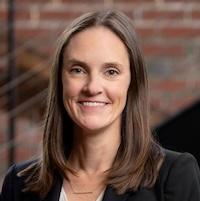
Colleen Tenan, MD, VP, Medical Director, Javara Research, utilizes EHRs to find patients that match inclusion-exclusion criteria through well-designed feasibility and recruitment queries, and partners with biopharma and hospitals to better access and leverage EHR data.

How are you consulting/advising pharma partners on crafting appropriate feasibility / query requests?
At the feasibility level, one mistake I often see is asking feasibility questions or patient access data that does not reflect the true complexity of the protocol. For example, asking for the general number of asthma patients may be misleading if the protocol is calling for only moderate-severe asthma patients with two exacerbations in the past year and an eosinophil count of >300. I would encourage sites to ask for patient data that will help them determine if patients who will actually meet the I/E exist at that site.
On the recruitment side, generating queries can be complicated because of the difficulty of balancing the sensitivity vs. specificity of the query. If you build a query too broadly, you will have a huge number of patients that might not qualify but the site staff has to filter through. If you build it too narrowly, you may exclude patients for things that might be missing or outdated in their charts. We try to pay attention to this balance and start our queries very narrow, and as we broaden them, using a well thought-out prescreener to capture what might not be found in the charts.
"One mistake I often see is asking feasibility questions or patient access data that does not reflect the true complexity of the protocol."
How have you partnered with industry and sites to utilize the data of local EHRs to improve clinical trials?
Approximately one year ago, Sanofi invited sites and data scientists from all over the world to convene in Paris where we shared tips, best practices, and struggles from our work using EHR data to enhance our ability to successfully conduct research trials.
Since then, we have continued to collaborate with Sanofi, providing them with our recommendations for how best to mine through EHR data, which they have shared with other sites, and they have helped us refine some of our data queries on studies we are currently working on. We are excited to have had the opportunity to be a part of the collaboration with Sanofi and to help shape a future where sites and sponsors can use the vast amount of data in local EHRs to help improve and streamline feasibility and recruitment.
How can pharma make sure that data queries match up with how patients are present in their medical record?
In concept, it seems simple – there is so much data in EHRs and technological advances have made mining through data much easier. However, it is important to remember that documentation in EHRs in the US still remains relatively fragmented, and there is a lot of information in the form of unstructured data.
Not all sites, especially smaller and standalone sites, have access to these more expensive AI tools that can interpret unstructured data. In addition, a lot of the queries that we generate depend on some degree of medical knowledge, so relying on data scientists alone can leave some holes in how protocols are interpreted.
I commend Sanofi for addressing both of these issues by providing recommendations for how to structure queries, but also for piloting a program to provide a tool for EHR interrogation so we all have access to the same technology.
"Incorporating the local PIs knowledge is essential when we generate queries, because unfortunately not everything found in the medical record is reality."
How are you working with sites to utilize their EHRs for clinical research?
Javara has been using EHR to augment our clinical research capabilities from our founding. We partner with healthcare systems, giving us access to large amounts of data, which we use for both feasibility and recruitment.
We always ensure to incorporate the voice of the PI to make sure we are building queries that accurately capture the realities of each site/region, and to ensure that we are best able to capture these patients at the point of care and at the right time in their disease journey.
Is there anything you want to touch upon re-creating inclusion/exclusion criteria that reflects the reality on the ground for patients?
Incorporating the local PIs knowledge is essential when we generate queries, because unfortunately not everything found in the medical record is reality. A patient may be prescribed a GLP1 but due to cost barriers, supply issues, side effects, etc, the patient may not be taking the medication but it remains in the medical chart. Knowledge of the standard of care does not always reflect the realities of what care patients are getting in everyday practice.
What are the larger trends in clinical research or clinical care that you feel are particularly impactful for the CRAACO movement?
One key trend is the desire to bring trials into new patient populations, as well as the need to expand the PI pool with new clinicians.
The ability to tap into EHR is important because it allows for easier identification of patients who may be good candidates for research, and it has the ability to give pharma the confidence that research patients fitting specific I/E are present in these untapped markets.
In addition, we have seen trials looking for a narrower and narrower patient profile, which further necessitates the need of precise patient matching as efficiently as possible.
What do you see as some of the bigger challenges that remain in preventing the bridge between clinical care and clinical research?
A lot of the conversation in research these days revolves around AI. How do we streamline site selection, patient identification, recruitment, and trial conduct with newer technologies, etc. But the one piece missing from these conversations is trust.
At the end of the day, I do not think that technology will ever replace providers in this last mile of recruitment. Patients are going to be much more likely to join clinical research trials when they hear about them from people they trust, including their local healthcare providers.
How can sponsors, CROs, IROs, and sites help each other overcome some of those challenges?
I would encourage the continued formation of more of these site partnerships. When sites and pharma work together during protocol development, we are better able to align criteria with real-life patient profiles.
It is much easier to modify an I/E early on in the process vs. when the trial is already running and needs a protocol amendment. And we, at the sites, are always happy to support any of these efforts that will make research more accessible to our patients that need it the most.
"At the end of the day, I do not think that technology will ever replace providers in this last mile of recruitment. Patients are going to be much more likely to join clinical research trials when they hear about them from people they trust, including their local healthcare providers."