
How AstraZeneca Formed Long-Term Site Relationships to Reduce Site Burden and Optimize Study Start-Up
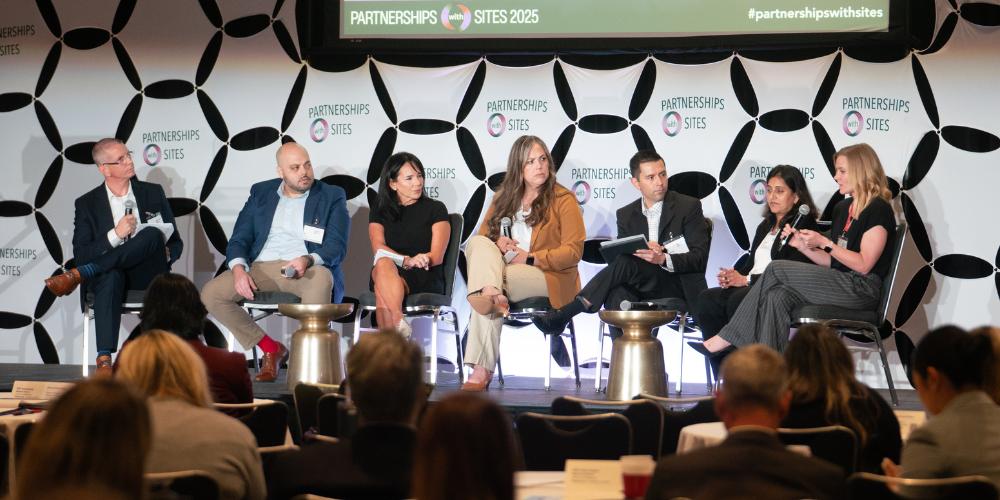
Tina Nghiem and Shannon Edwards, Site Engagement Leads at AstraZeneca, talk about how AstraZeneca is deploying a right-size approach with different levels of partnership to build strong foundations and collaborations with their clinical sites, and enabling a two-way dialogue.

How is AstraZeneca collaborating with sites, that other sponsors can take note of and replicate?
AstraZeneca has a tiered partnership model to meet sites where they are. Sites can move between the levels as their capacity and engagement evolves over time, but all levels provide the site with a central point of contact within AstraZeneca clinical operations.
During recurring site meetings, the Site Engagement Lead and the site leadership work together to identify operational efficiencies and determine the best approach for execution. While it takes time to implement the strategies, these efforts ultimately position the site for greater success in future studies.
By collaborating closely with our site partners, we focus on shared goals, streamlined operations, and continuous improvement, ensuring both organizations realize the greatest possible value from the partnership.
"By providing the best customer service and fostering trust-based, long‑term partnerships, we hope that sites are motivated to run our studies and participate in future studies."
What are the different tiered partnership models AstraZeneca is deploying to connect to and collaborate with sites?
AstraZeneca’s Partners in Care (PIC) program is a network of global best-in-class clinical sites that engage at both a scientific and operational level. Operationally, we collaborate with sites to streamline and accelerate study activation, increase recruitment, and improve data entry and quality.
The scientific pillar of the PIC program emphasizes sharing AstraZeneca’s study portfolio with site PIs early and often. The purpose is to build awareness and engagement and obtain input on study design. Early feedback on study design provides insight into potential operational and scientific challenges proactively, which can lead to refinement that strengthens the final protocol.
AstraZeneca’s Preferred Partner program includes high-performing clinical sites in an operations-focused collaboration, designed to align processes to streamline study activation and increase recruitment. The program fosters a close connection with sites, enabling us to work together to expand their study portfolio. This partnership paves the way for a deeper, long-term partnership between sites and AstraZeneca.
How has AstraZeneca worked to address operational challenges raised by sites?
Through the PIC program, AstraZeneca collaborates with sites to co-develop strategies that streamline study activation and reduce site burden. Our goal is to establish a master CSA and a rate card with each site. We assign a contract manager to every site to ensure continuity and embed knowledge sharing into the engagement model, which accelerates contracting and budget timelines.
To decrease regulatory burden, we maintain a site repository so our teams are familiar with each site’s processes, reducing the number of site queries. This knowledge base enables AstraZeneca study teams to eliminate redundant discussions and customize the start-up process to align with each site’s workflow. For sites, this makes the start-up experience more positive and faster, which allows the site to have more time to enroll. And for AstraZeneca, it means we’re not only accelerating start up but also forecasting our study milestones more accurately. When possible, we also preapprove site templates, further minimizing administrative workload and helping sites start faster.
We offer a data entry support program on a temporary basis to address staffing shortages, budget constraints, and other operational pressures. We engage sites in recruitment discussions to identify partnership opportunities and tailor support to local needs. As an example, AstraZeneca developed a Just In Time model to support PIC sites with strong activation but weaker recruitment to participate in AstraZeneca studies.
What are some of the impacts on study startup timelines?
PIC sites demonstrate more efficient study start up timelines, outpacing other sites by 14-18%. A key driver of this improvement is a 36% reduction in budget negotiation cycle times.
There is an online repository of site activation activities and timelines maintained by the Site Engagement Lead, who continually updates it with new insights. This knowledge base enables AstraZeneca study teams to eliminate redundant discussions and customize the start-up process to align with each site’s workflow. For sites, this makes the start-up experience more positive and faster, which allows the site to have more time to enroll. And for AstraZeneca, it means we’re not only accelerating start up but also forecasting our study milestones more accurately.
Anything else to add?
While patient centricity is important, site centricity is equally important. Sites continue to operate under significant resource constraints. Sponsors and CROs need to adopt more innovative, out-of-the-box approaches to support sites, reducing site burden and enabling staff to manage study demands alongside patient care.
Sites are in essence our customers. By providing the best customer service and fostering trust-based, long‑term partnerships, we hope that sites are motivated to run our studies and participate in future studies.
"By collaborating closely with our site partners, we focus on shared goals, streamlined operations, and continuous improvement, ensuring both organizations realize the greatest possible value from the partnership."